Product Structure
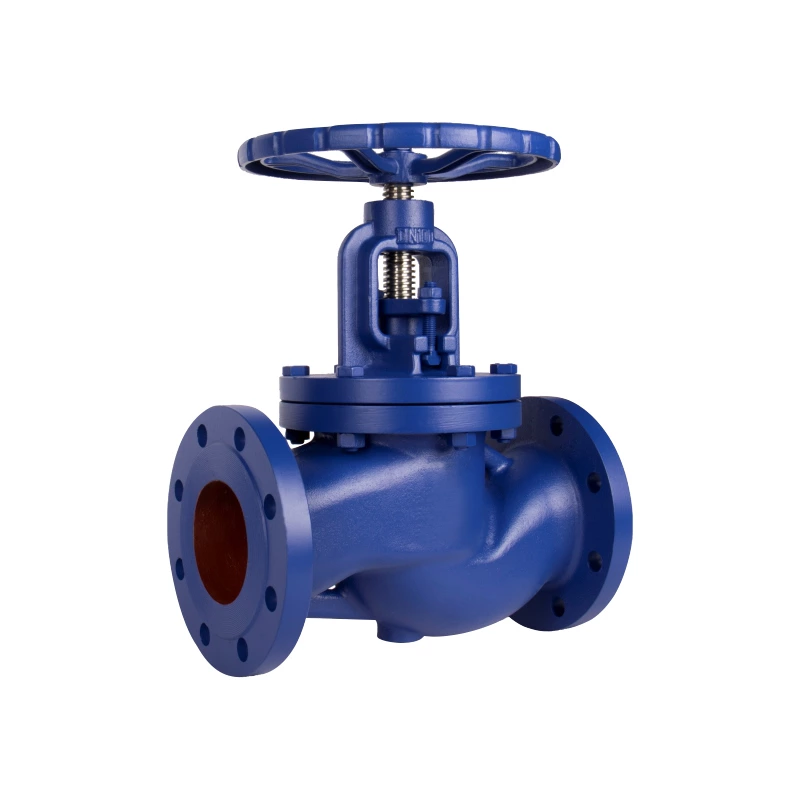
The primary feature of a bellows-sealed globe valve is the replacement of conventional packing seals with a bellows seal. The upper outer surface of the bellows is welded to the valve body, creating a sealed enclosure that contains the process fluid. The valve stem is positioned inside the bellows, with the bottom of the bellows connected to the valve plug (disc); the expansion and contraction of the bellows control the opening of the valve plug. Consequently, as long as the bellows remains intact, leakage is impossible. Bellows seals offer exceptional reliability, making them suitable for use with toxic media or gases—such as chlorine—by effectively preventing external leakage.
Product Features
1. Dual-seal design (bellows plus packing): If the bellows fails, the stem packing serves as a backup to prevent leakage, ensuring compliance with national sealing standards.
2. Eliminates fluid loss, reduces energy waste, and enhances the stability of plant equipment.
3. Long service life, resulting in fewer maintenance requirements and lower operating costs.
4. Robust bellows-seal design ensures zero stem leakage and provides a maintenance-free solution.
5. For gas-service applications, the valve seat utilizes a soft PTFE seal to enhance sealing performance.
6. For high-temperature applications (up to 425°C), the valve seat employs a hard-faced conical seal, achieving zero-leakage, gas-tight performance.
Function
In a globe valve, the bellows serves as a sealing element to prevent the medium from leaking out via the valve stem. The lower end of the bellows is seal-welded to the valve stem, while the upper end is seal-welded to the gland (bonnet flange/cover). A metallic spiral-wound gasket is typically installed between the gland and the upper flange to ensure a secure seal. Bellows-sealed globe valves provide superior sealing integrity, with external leakage being extremely rare.